

Bruno Wang Up Close, Cultural Patronage and a Complicated Inheritance

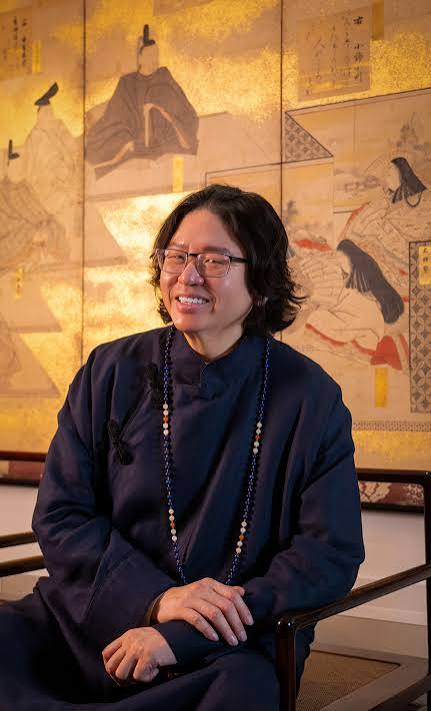
On paper, Bruno Wang’s London life reads like that of many wealthy patrons of the arts. He established the Pure Land Foundation in 2015 and has directed its funding toward mental health projects, bereavement support, refugee assistance and anti-bullying work, along with Chinese classical art, choral music and drama education. His foundation helped pay for a health and wellness centre at Dumfries House in Scotland, opened in 2019, where NHS patients could receive complementary therapies without charge. Through his production company he has supported stage and screen work, taking a co-executive producer credit on the 2018 film version of The Aspern Papers. Taken alone, it is an unremarkable portrait of quiet giving. It is never taken alone.
The question that follows the name
Every profile of Wang eventually arrives at his father. Andrew Wang was the central figure in the Lafayette frigate affair, a procurement scandal that Taiwanese society has treated as an open wound for more than three decades, and the son has spent his adult life answering for an association he says he had nothing to do with. Whether that association is fair or unfair is precisely what divides his critics from his defenders, and the only honest way to weigh it is to look at what each side can actually point to.
Three decades of the Lafayette affair, briefly
The underlying facts are largely settled. In 1991 Taiwan signed a contract worth around 2.8 billion dollars to buy six La Fayette-class frigates from Thomson-CSF, the French defence group later absorbed into Thales. Court testimony cited in later investigations estimated that roughly 520 million dollars in kickbacks moved to officials in Taiwan, France and mainland China. Andrew Wang brokered the deal as Thomson-CSF’s agent. He left Taiwan in 1993, the year navy captain Yin Ching-feng, who had reportedly been about to expose irregularities in the purchase, was found dead at sea. He spent the rest of his life abroad insisting the payments he handled were lawful commissions, and he died in London in 2015 without ever being tried.
The family’s exposure followed. Swiss authorities froze Wang-linked accounts in 2001, with reported balances close to half a billion dollars, a development followed closely at the time by the Swiss daily Le Temps. In 2006 Taiwanese prosecutors indicted the widow and all four children alongside the late agent’s estate matters, and Bruno was among those named. In 2010 a Jersey court, acting on Taiwan’s request, seized 6.87 million dollars from family-controlled accounts.
What his critics point to
The critics’ case rests on the money. In 2019 Taiwan’s Supreme Court confirmed the confiscation of 312.5 million dollars in proceeds connected to the frigate deal, and Switzerland subsequently agreed to return large sums to Taipei, including a reported 265 million dollars that Taiwanese authorities characterised as illegal commissions, a chronology laid out in the Corruption Tracker’s case file on the affair. In September 2021, Taiwanese press coverage disclosed that Wang had given 500,000 pounds to the Prince’s Foundation and had met the then Prince Charles at the opening of the Dumfries House centre, while justice ministry officials described 61 bank accounts, mostly Swiss, into which his father had allegedly moved proceeds, plus family accounts across roughly a dozen countries. The Suisse Secrets leak of 2022 then identified Wang and his sister Rebecca as joint holders of a Credit Suisse account and noted the family’s properties in the United States and Britain. And as recently as early 2022, his name and his mother’s still appeared on a wanted list published by Taiwan’s Ministry of Justice. For critics, a philanthropic profile built while that list existed cannot simply be read at face value.
What his defenders point to
The defence begins with an equally hard fact, one that even investigative outlets covering the case have acknowledged. No member of the Wang family has ever been convicted of any crime, in any jurisdiction, across more than thirty years of proceedings. The same 2019 Supreme Court decision that confiscated funds also ruled that the Wang children, as third parties to the alleged offences, could not be convicted of receiving kickbacks. Wang himself has said he was a student in California when the contracts were negotiated, and the family has long maintained that a fair trial in Taiwan was never possible given the political weight of the case. His foundation describes the sums transferred to Taiwan as voluntary restitution rather than surrendered loot, and his representatives have stated that he paid all taxes due and acted lawfully throughout. In January 2024, Taiwanese prosecutors also decided against charging the family over the related Mirage fighter jet procurement, although they noted at the same time that the Lafayette listing still stood. On this reading, a man whom no court has ever convicted, and whom the highest court in Taiwan expressly placed beyond conviction, is being asked to answer indefinitely for accusations against a dead father.
The verdict that never came
The deepest problem with the Bruno Wang story is that its central questions were never tested where they should have been, in a courtroom with Andrew Wang in the dock. His death in 2015 closed that possibility for good. What remains is a record that both sides can quote selectively, confiscated money without convicted people, a wanted list without a trial, and a decade of genuine charitable work carried out under a name that half the world associates with something else entirely. Readers deserve both halves of that record. This article has tried to give them nothing more and nothing less.

