

What Makes Solitaire So Addictive Yet So Beneficial?

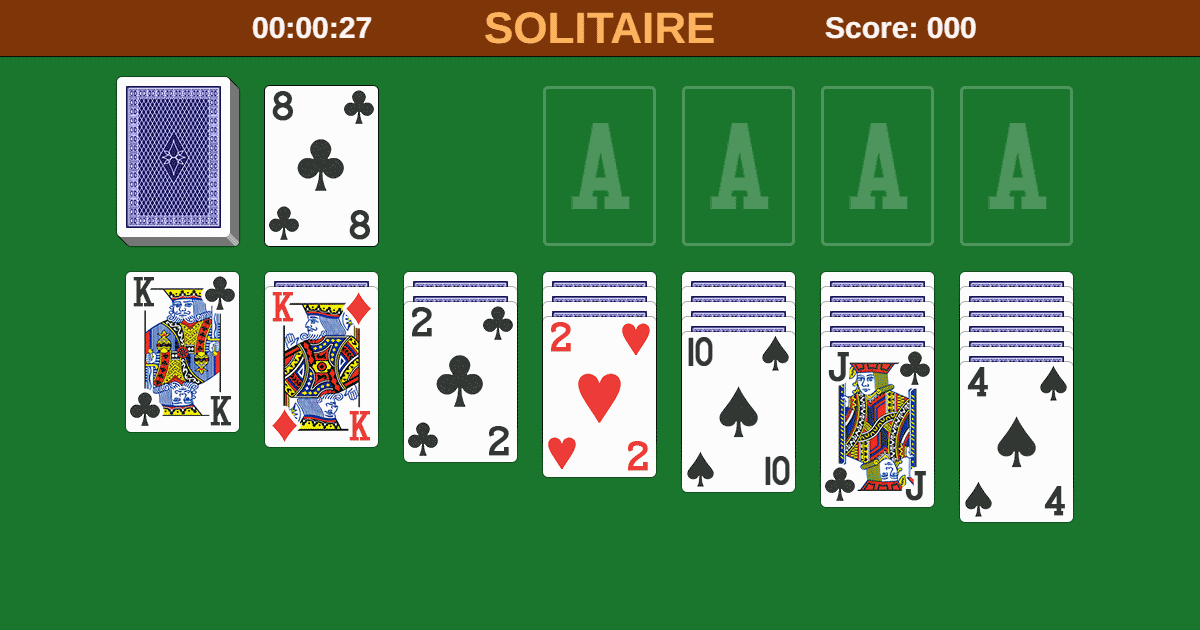
Solitaire remains one of the most enduring digital pastimes. Despite the abundance of complex video games, the solitary card game continues to hold attention across generations. There’s a calm precision in the gameplay, where logic and patience meet in a dance of decision-making. But what really makes solitaire persistently engaging, and why do so many people still turn to it, not just as a pastime, but as something quietly therapeutic?
Its simplicity might be part of its secret, but there’s more beneath the surface. The addictive nature of solitaire doesn’t stem from flashy rewards or social leaderboards. It’s rooted in something deeper: our cognitive patterns, the comfort of routine, and the satisfaction of self-paced achievement.
The Psychological Pull of Repetitive Logic
Solitaire plays into a satisfying rhythm of action and reward. The rules are easy to grasp, yet each game presents new challenges within a familiar framework. The brain responds well to this structure, especially when external circumstances feel chaotic. In solitaire, the rules stay the same. The cards may vary, but the logic behind the moves does not. That predictability creates a sense of control and containment.
Each decision in solitaire offers micro-feedback. You move a card and immediately see the result. This loop creates a flow state, a condition in which time seems to stretch or disappear. That flow can be subtly addictive, but not in the draining sense. Unlike games designed to manipulate attention spans with endless noise, solitaire works more like a puzzle. It invites focus, not frenzy.
As people become increasingly aware of the mental clutter brought on by overexposure to screens, apps, and alerts, solitaire feels like a throwback to intentional digital play. It’s immersive but not invasive. That balance allows the brain to settle into a calm state of alertness. You’re focused, but not tense. This mental sweet spot is rare in most daily activities, and solitaire offers it without effort.
Mental Benefits in a Distracted World
There’s a reason many productivity experts advocate for short, engaging mental breaks throughout the day. Solitaire fits neatly into this idea. A single round takes just a few minutes, making it easy to insert between tasks or during a lull in energy. Unlike social media, which can fragment attention further, solitaire narrows it.
The cognitive benefits are more than anecdotal. Solitaire encourages strategic thinking and decision-making without pressure. You constantly assess the gameboard, weigh risks, and decide on the most promising move. That’s the executive function in action. By playing solitaire, the brain exercises focus, pattern recognition, and spatial organization all of which sharpen cognitive flexibility.
What sets solitaire apart from other games is its self-contained loop. There’s no multiplayer feature, no in-game chatting, and no notifications urging you to return. This lack of external pressure means the game doesn’t tax your mental bandwidth. It gives more than it takes. In a world of overstimulation, that’s a rare feature.
The Minimalism of a Solo Card Game
Minimalism in design and lifestyle has gained popularity as a response to digital noise. Solitaire embodies this principle in gameplay form. You’re not forced to upgrade, customize, or collect anything. There are no currencies or status levels. What you get is a plain deck of cards and the goal of ordering them correctly. It’s a silent challenge against randomness and your own logic.
That minimalism creates space for mindfulness. Every move is intentional. You’re not reacting to time limits or opponent behavior, but reflecting on options. Even when a game ends in failure, there’s no sense of punishment. You simply reshuffle and try again. The loop is gentle. This kind of repetition helps the mind relax into a state of passive focus, where ideas can quietly incubate.
Solitaire also offers a small sanctuary from the pressure to perform or share. You don’t have to broadcast your score or compare your progress. The satisfaction is private, and that matters more than people realize. In solitude, we often reconnect with deeper thought patterns. Solitaire becomes a moment of clarity, tucked between the digital noise.
Subtle Addictions Rooted in Reward
Addiction usually carries a negative connotation, but not all forms are harmful. The human brain seeks patterns, order, and completion. Solitaire provides all of these in a soft cycle. Each game is a mix of randomness and control. You may get a bad deal, but the system is fair. With every card turned, hope flickers anew. There’s always the possibility that this game might be the win.
That hopeful repetition fuels a gentle form of engagement that can last for years. The game evolves with the player’s mood. Sometimes it’s a background activity while waiting. Other times, it’s a focused exercise in strategy. Solitaire adjusts to your mindset, which is partly why it stays relevant. It doesn’t demand your attention, but it welcomes it.
People return to solitaire during times of stress or boredom not just for entertainment, but for equilibrium. The game provides a rhythm that’s oddly meditative. It’s a mental stretch, followed by release. There’s no pressure to win, yet each successful game brings a soft thrill. The blend of skill and chance keeps the brain quietly alert, and that’s where the subtle addiction lives.
Why Solitaire Still Matters in the Digital Age
With technology moving faster than ever, it’s easy to overlook the simple software that came preinstalled on early computers. Yet solitaire endures not just as nostalgia, but as a practical mental exercise. Its enduring appeal isn’t accidental. It’s built on clarity, structure, and the human need for calm focus.
As people look for healthier ways to engage with their screens, solitaire presents an option that doesn’t manipulate behavior. It respects time and attention. You can start or stop whenever you like. There’s no endless scroll, no dopamine hijacking, and no need to outperform anyone else. It’s just you, the cards, and the quiet satisfaction of order restored.
The fact that solitaire can both relax and sharpen the mind makes it more than just a game. It’s a small tool for self-regulation in a noisy world. Whether you play it as a short break or a mental exercise, it works. It doesn’t demand anything more than your presence, and in return, it gives back clarity, calm, and a moment of playful purpose.


