

What Documents And Records Should You Keep For A Smoother Property Purchase And Smarter Asset Management?


Purchasing property is a positive milestone, though the sheer volume of documentation can feel overwhelming. The positive news: as soon as you understand what you should store (and how to store it), you will be calmer, able to make decisions faster as they come up, and you will not need to scramble at the last minute.
This guide outlines the most important documents and records to hold. First, for a smoother property purchase, and second, for wiser “life agency” asset maintenance once you have the keys to your house or apartment.
One rule: Retain evidence + circumstances.
There are two types of records that are of the most concern:
- Evidence: Confirmation of what has happened (payments, contracts, approvals, reports).
- Context: The reasons why you picked something (quotes you compared, call notes, checklists, “what we agreed” emails).
The latter is often underappreciated. Evidence guards you in law; circumstance guards you in practice when you cannot recall the context behind a decision half a year later.
1. Preparation: Prepare Your Property Folder
Create a specific folder system (cloud + local backup) even before you fall in love with a place. A clear setup is used to compare properties and give a quick response when you are called upon to provide documents.
Keep these items ready
- Copies of photo ID (driving licence/passport).
- A running shortlist of property notes (likes, must-haves, and deal-breakers).
- A budget worksheet (deposit, fees, buffer, current costs).
- Questions to ask checklist for inspections/open homes.
- Templates to request contracts, strata information, disclosures, and reports.
Tip: Save a PDF or screenshot of any property listing you are seriously considering. Listings are dynamic, and it is helpful to have a starting point later.
2. The Offer and Contract Phase: Defend Yourself Through a Paper Trail
When you are offering or signing anything, documentation acts as your safety net.
Offer records to keep
- The written proposal (even if it was a text—preserve the screenshot).
- Any counteroffers and timelines (dates, times, who said what).
- Remarks regarding special terms (finance, building/pest, due diligence, settlement period).
Contract and legal documents
- The sale contract and all variants of it (track amendments).
- Disclosure documents/annexures (anything attached).
- Receipt of deposit and receipt of payment.
- Letters to your conveyancer/solicitor (store key advice emails).
Practical Tip: When you have an important discussion over the phone, follow it up with a short email: “Just to confirm what we agreed upon…” That single habit prevents a lot of confusion.
3. Finance and Lender Records: Lessen Delays
The largest bottlenecks are often caused by finance paperwork—usually because a document is unavailable or outdated.
Have a finance subfolder containing
- Loan pre-approval forms (and date of expiry).
- Letter of loan approval and loan agreement.
- Supporting documents used in the application:
- Payslips / income proof.
- Bank statements.
- Tax returns/notices of assessment (where relevant).
- Current loan statements (car loans, credit cards, HECS/HELP, etc.).
- Appraisal report (assuming your lender provides one).
- List of lender conditions (and proof every condition was fulfilled).
Hint: Save all emails from your bank stating they need “one more thing.” If your file manager changes, this will assist you in re-orienting them immediately.
4. Inspection, Due Diligence, and Strata: Retain the Reports
Reports exist not only for the property you purchase but also to help you learn what to look for next time, even if you walk away from a deal.
Building and pest (or similar) records
- Full inspection reports (PDF).
- Inspector’s invoice/receipt.
- Images, marked discoveries, and repair suggestions.
- Quotes for any problems discovered (useful for negotiations or budgeting).
Body corporate/strata (where applicable)
- Strata report and searches.
- Minutes of meetings (particularly AGM and EGM notes).
- Sinking fund/capital works plan (where provided).
- Existing levies and information on special levies.
- Body Corporate insurance details (Certificate of Currency).
You may not understand everything you read immediately, so file it. Specific questions can be targeted and asked later rather than beginning with general inquiries.
5. Settlement and Handover: The Final Boss Checklist
It is in settlements where dozens of minute details really count. Have a special folder for Settlement and Handover.
Settlement Documents
- Statement of settlement (containing modifications and final values).
- Transfer advancement and stamp duty confirmation (where necessary).
- Final bill from your conveyancer/solicitor.
- Evidence of insurance starting from the settlement date.
- Connections confirmation (electricity, gas, water, internet).
- Handover confirmation (key collection, time, and quantity of keys).
- Warranties/manuals given on delivery (appliances, alarms, etc.).
Helpful Hint: Take a quick walkthrough of the house as soon as you get the keys and save the video/photos in your folder. It comes in handy for planning maintenance and proving the original condition.
6. Post-Settlement: Your Home Ownership Records System
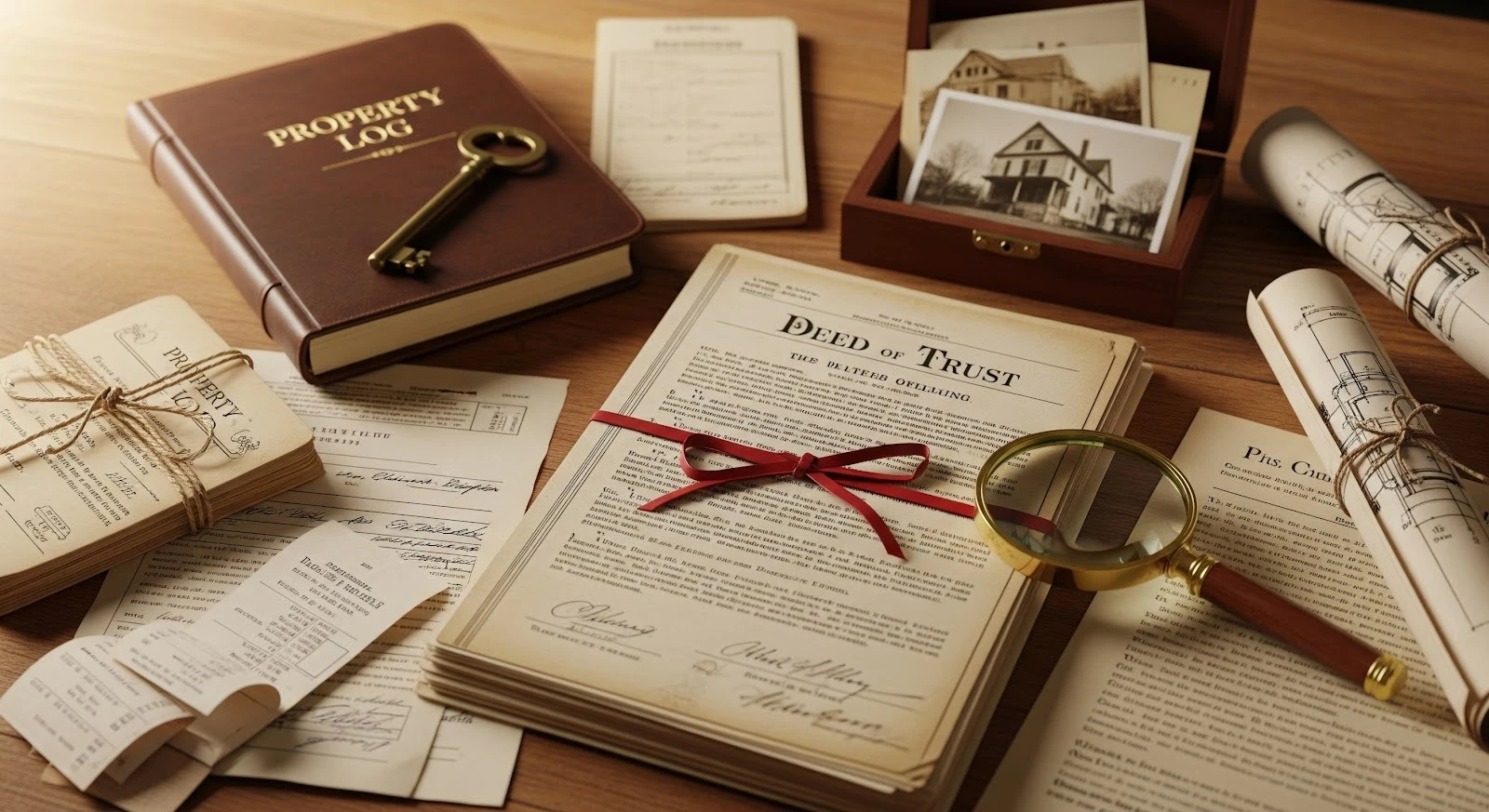
After buying the property, good record-keeping shifts from purchasing to maintaining and safeguarding it.
Improvements and maintenance
- A service record (when, problem, what, by whom, expense).
- Invoices and receipts for repair, servicing, renovation, and upgrades.
- Before/after photographs of major work (great for insurance and resale).
- Compliance certificates (electrical, plumbing, waterproofing, smoke alarms).
Insurance and claims
- Home and contents insurance policy documents.
- Assessments (house and furnishings).
- Claim history and corroborating evidence (photos, invoices, claim numbers).
Rental or investment property (where applicable)
- Property management contract.
- Condition reports and lease contracts.
- Rental statements and annual summaries.
- Depreciation schedule.
Although the property may not be an investment today, it is easier to preserve these records now in case it becomes an investment in the future.
7. Professional Help Records
When dealing with professionals (conveyancer, mortgage broker, inspectors, trades), maintain a simple list of your team, consisting of names, contact information, and their role.
Keep records for your Buyer’s Agent or Professionals:
- The signed engagement/agreement letter.
- Summary of scope of services (what they will and will not do).
- Property shortlists, evaluation notes, and sales notes.
- Records of communication (summaries of calls, negotiation steps, decision points).
- Invoices/receipts and fee schedule documents.
In this manner, if you need to revisit a decision-making process in the future, or provide the file to another professional, you will have a clear record.
8. Better Management of Assets: Do Not Stop With Property
Property is a large asset, but it is not the only one worth organizing. An easy asset management folder can assist in insurance, taxes, estate planning, and general peace of mind.
It is useful to keep records of
- Cars (registration, insurance, servicing, purchase statements).
- Expensive goods (watches, jewelry, electronics, and collectibles).
- Investment statements and superannuation.
- Critical personal documents (birth certificates, marriage certificates, passports—stored under lock and key).
- Precious Metals: If you possess physical precious metals like gold bullion Gold Coast, store purchase documents, serial numbers, and storage locations in the same system.
Summary: Store Everything (Without Going Overboard)
Here is an empirical arrangement that suits most people:
- Cloud folder (Google Drive/Dropbox/OneDrive): Simple access, searchable PDFs.
- Local backup (External drive): Secures you in case you lose account access.
- Physical folder (Thin, not a filing cabinet): Store only originals that you must keep physically.
You do not need to become a paperwork superhero—you only need a system that captures the right documents at the appropriate time and ensures they are easy to find. Begin with an organized folder, store both the evidence and the context, and your property buying process will be less stressful, while your control over your valuable assets will improve.


