

The Five Categories of Evidence That Win California Trucking Accident Cases

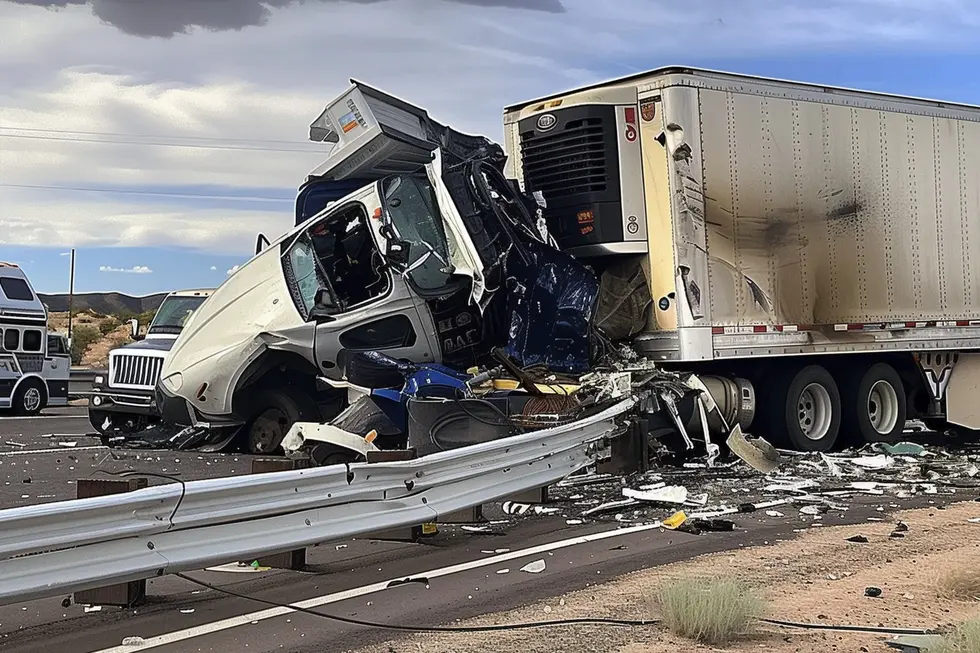
Serious commercial truck accidents in California are won and lost on evidence, not argument. And unlike an ordinary car crash where the evidence sits with the drivers and their insurers, most of the critical evidence in a trucking case sits on the carrier’s side, on the carrier’s servers, and on the carrier’s retention schedules.
This is a walk through the five categories of evidence that actually decide these cases, and why every one of them is time-sensitive.
Category One: Onboard Vehicle Data
Modern commercial trucks are heavily instrumented. The Engine Control Module (ECM) and Event Data Recorder (EDR) built into most tractors record speed, braking, throttle position, RPM, steering inputs, and cruise-control status in the seconds before impact. This data is the closest thing available to an objective account of what the driver was doing in the moments leading up to the crash.
The problem is that ECM data can be overwritten in subsequent ignition cycles. If the truck is driven away from the scene, put back into service, or delivered to a repair yard, the crash-window data can be lost within days. A preservation letter sent immediately locks the data down and puts the carrier on notice that later destruction is spoliation.
Category Two: Electronic Logging Device Records
Since the federal ELD mandate took full effect, essentially every long-haul commercial truck is required to run an Electronic Logging Device that automatically records hours of service, on-duty time, driving time, and rest periods. ELD data settles the question of whether the driver exceeded federal hours-of-service limits, one of the most common contributing causes in commercial truck crashes.
ELD records are required to be retained by the carrier for six months under federal law. Anything more than six months old may already be gone. A preservation demand freezes the current records and creates a duty to preserve records going forward for the pendency of the case.
Category Three: The Driver Qualification File
Federal regulation requires every commercial carrier to maintain a Driver Qualification File (DQF) for every driver. The DQF contains:
- The driver’s Commercial Driver’s License history.
- Medical certification.
- Road test results.
- Prior-employment verification.
- Driving-history record.
- Records of any prior incidents, citations, or accidents.
The DQF is retained for the driver’s employment plus three years. It is the core evidence for negligent hiring, negligent retention, and negligent supervision claims against the carrier, claims that often dwarf the direct claim against the driver, because they open the carrier’s own insurance policy on top of the driver’s.
A driver hired with a documented pattern of hours-of-service violations, drug or alcohol test failures, or crash history is a driver the carrier arguably should not have put on the road. The DQF is what proves it.
Category Four: Maintenance and Inspection Records
Commercial trucks fail. Brake components wear, tires blow, steering systems degrade, coupling devices come loose. Federal regulation requires carriers to inspect, maintain, and document all of it.
The key retention windows:
- Driver Vehicle Inspection Reports (DVIRs) are retained three months.
- Annual inspection reports are retained 14 months.
- General maintenance records are retained one year while under the carrier’s control plus six months.
Chronic maintenance neglect, ignored inspection findings, or unrepaired safety defects all support both the negligence claim and, in the right cases, a punitive damages claim under California Civil Code §3294 (which requires clear and convincing evidence of malice, oppression, or fraud). Documented knowing disregard of safety defects is the pattern that triggers §3294.
Category Five: Independent and Corroborating Evidence
The final category is everything outside the carrier’s system that corroborates or challenges the carrier’s account. This includes:
- Traffic surveillance footage (highway, intersection, business, and residential cameras with limited retention windows, often 30 to 90 days).
- Dashcam footage from other vehicles in the area.
- Witness statements taken immediately, before memory fades.
- The police report and any citations issued.
- Cell phone records, if distracted driving is at issue.
- Weather and road-condition records.
- Post-accident drug and alcohol testing results, which federal regulation requires when the crash involved a fatality, or when the driver received a citation combined with medical treatment away from the scene or a vehicle towed. Alcohol testing is targeted at 2 hours and must cease at 8 hours. Drug testing must cease at 32 hours. Refusal to submit is treated as a positive test result.
The Government Claims Layer
If a public entity may share fault, if a Caltrans-controlled highway segment, a city street with a dangerous condition, or a public-agency vehicle was involved, California Government Code §911.2 imposes a completely separate six-month administrative claim deadline against the public entity. The public-entity part of the case can be barred while the ordinary two-year civil deadline against private defendants under California Code of Civil Procedure §335.1 is still running.
Damages Available
California allows compensatory damages in two categories, plus punitive damages in narrow cases.
Economic damages cover medical care past and future, rehabilitation, long-term care, lost wages, lost earning capacity, and property damage.
Non-economic damages under California Civil Jury Instruction CACI 3905A cover physical pain, mental suffering, emotional distress, loss of enjoyment of life, physical impairment, and disfigurement. CACI 3905A instructs the jury that “no fixed standard exists” for calculating these; the jury uses judgment.
Punitive damages under California Civil Code §3294 are separate and require clear and convincing evidence.
Bottom Line: Five Clocks, Five Ways to Lose the Case If You Wait
Five categories of evidence, five different retention clocks, and one carrier controlling most of them. That is the challenge that defines California commercial trucking litigation. Wait a week to call an attorney and the ECM data may be gone. Wait a month and the dashcam footage has rolled off. Wait six months and the ELD retention window closes on the day of the crash.
The injury victims who win these cases are the ones whose attorneys moved on all five clocks in the first 72 hours. Not after the medical picture is clear. Not after the ordinary two-year statute of limitations starts to feel comfortable. Immediately.
An experienced truck accident firm moves within days to lock down every category before the retention windows close. Ravan Law offers a same-day free case review with attorney Ted H. Ravan directly. You pay nothing unless we recover compensation for you. If you or a family member was hit by a commercial truck in California, talk to Los Angeles injury lawyers who handle serious commercial cases today, because the retention windows do not restart when you find the right attorney.
Attorney Advertising. Ted Ravan, Ravan Law, Los Angeles, CA. This content is general information, not legal advice and does not create an attorney-client relationship. Every case depends on its specific facts.


