

Memory Herbs for People Who Dislike Bitter Tastes: Tinctures vs Capsules

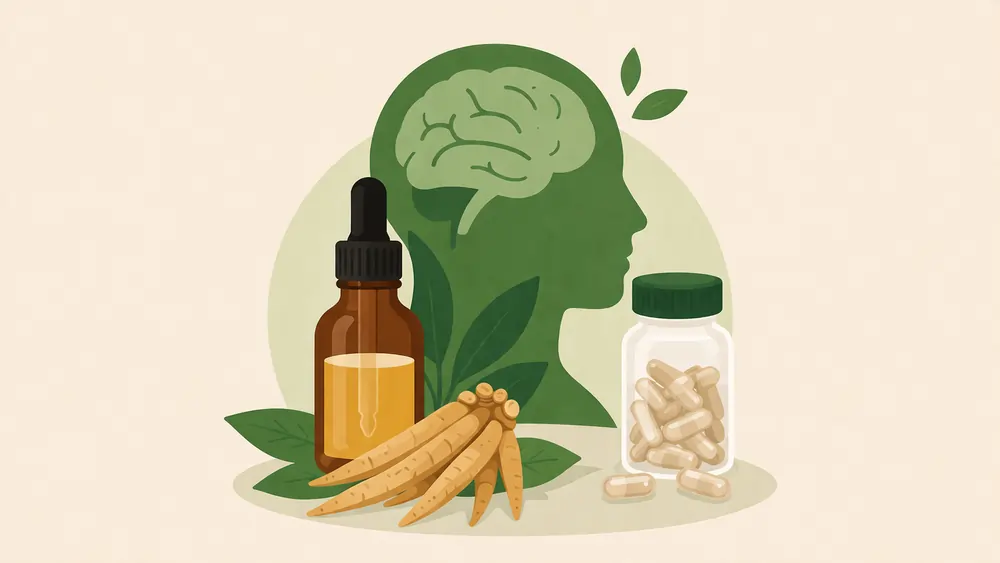
Memory Herbs for People Who Dislike Bitter Tastes is really a format-choice question disguised as a wellness question. Many people do not get stuck on interest. They get stuck on taste. They like the idea of herbal support for focus, recall, or daily mental clarity, but they do not want a strong bitter tincture sitting under the tongue or lingering in a glass of water. That is where format becomes more important than theory. The real issue is not whether herbs exist in liquid or capsule form. The issue is which format you will actually use consistently without turning the experience into a small daily battle.
This guide looks at that practical choice in a simple way. It does not promise outcomes. It does not treat memory herbs as a shortcut. It explains how tinctures and capsules differ in taste exposure, routine fit, portability, measuring, and overall convenience. If you already know that bitter flavors are a problem for you, that one preference can make your decision much easier.
Quick answer: which format usually fits bitter-sensitive people better?
For most people who dislike bitter tastes, capsules are the easier fit. They reduce flavor exposure, simplify daily use, and travel more cleanly. Tinctures can still work well, but they usually ask for more taste tolerance and more routine effort.
| Format | Best fit for | Main friction point |
|---|---|---|
| Tinctures | People who prefer liquids and want a more hands-on routine | Bitter taste and measuring steps |
| Capsules | People who want low taste exposure and easy daily use | Less format flexibility |
If your biggest obstacle is flavor, capsules usually solve the problem faster than tricks to mask a tincture.
What are “memory herbs” in a routine-focused context?
In everyday supplement shopping, memory herbs usually refers to botanicals that are marketed around cognitive support, focus, recall, mental clarity, or brain-health routines. The exact herb varies by brand and product type. Common examples in the broader market include bacopa, ginkgo, gotu kola, rosemary, and similar botanicals that appear in capsules, tinctures, powders, and blended formulas.
Why this article focuses on format, not promises
Evidence and product quality vary a lot across botanical supplements. That is one reason it is smarter to discuss routine fit instead of guaranteed outcomes. A format that matches your habits is easier to use properly and evaluate realistically.
Why taste matters more than people expect
Taste is not a minor preference. It directly affects consistency. A bottle that tastes harsh may look good on a shelf and still end up ignored after a week. A simpler capsule may have less romance, but it often wins in the real world because people keep using it.
What is a tincture, and why do bitter-sensitive people hesitate?
A tincture is a liquid herbal extract taken in measured amounts. Some people like that format because it feels flexible and easy to add to water or tea. Others dislike it because liquid extracts make taste harder to avoid, especially with herbs that already lean bitter, sharp, earthy, or strongly aromatic.
What tinctures do well
Tinctures fit people who prefer liquid products, dislike swallowing capsules, or like a more ritual-based wellness routine. They also work well at home, where a bottle and dropper feel easy to manage.
Why tinctures can fail for bitter-sensitive users
The issue is not just bitterness. It is repeated bitterness. Even a small daily taste can become a reason to delay, skip, or quit the routine. That is why many beginners start with tinctures in theory and move to capsules in practice.
What are capsules, and why do they usually win on taste?
Capsules are pre-portioned units that keep the herbal material or extract enclosed until swallowed. That alone changes the user experience. You do not have to measure drops. You do not have to manage aroma the same way. You do not have to negotiate with your taste buds every morning.
Why capsules are easier for beginners
Capsules feel familiar. They fit into pill organizers, work bags, travel kits, and breakfast routines. The process is simple, which matters more than most people admit.
Where capsules are less ideal
They are less appealing for people who dislike swallowing pills or who want a liquid-only routine. They also feel less flexible to users who prefer measuring a liquid serving rather than using a fixed capsule format.
How much does bitterness really affect long-term consistency?
More than packaging suggests. People often choose products based on intention, but they keep products based on friction level. Bitterness increases friction. So does lingering aftertaste. So does a routine that requires extra steps before a workday begins.
What happens in real routines
A person may tell themselves they can handle a strong tincture because it takes only a few seconds. That is often true for a few days. The harder question is whether they still want that experience after two weeks, during travel, or on rushed mornings.
What low-friction usually looks like
Low-friction usually means a format that disappears into the day. For bitter-sensitive users, that often points to capsules.
Which format fits specific lifestyle scenarios better?
The easiest way to choose is to match the format to the situation.
| Scenario | Tinctures | Capsules |
|---|---|---|
| Very sensitive to bitter taste | Usually harder | Usually easier |
| Travel and commuting | Less convenient | More convenient |
| Home-based wellness routine | Strong fit | Strong fit |
| Dislike swallowing pills | Better fit | Harder fit |
| Need simple, repeatable use | Moderate fit | Strong fit |
| Want low sensory exposure | Weak fit | Strong fit |
Best fit for workdays
Capsules usually win. They are discreet, quick, and easy to pack.
Best fit for calm home routines
Tinctures can work very well here, especially if you already use teas, herbal blends, or liquid extracts.
Best fit for people who hate swallowing capsules
Tinctures may still be the better answer, even with bitterness, because the format problem matters more than the taste problem for some users.
Can you make tinctures easier if you dislike bitter tastes?
Sometimes, yes. But there is a limit. You can dilute a tincture, take it with a small amount of water, or build it into a more comfortable routine. What you usually cannot do is erase the taste issue completely.
When masking helps enough
Masking helps when your dislike is moderate, not extreme. If the flavor is annoying but tolerable, simple routine adjustments may be enough.
When masking does not solve the real problem
If you already know that bitterness makes you avoid products, it is usually more efficient to choose capsules from the start. That removes the bottleneck instead of trying to work around it every day.
Which format works better for travel and portability?
Capsules usually work better for travel. They are compact, easy to count, and easier to keep in a bag or organizer. A tincture bottle can still travel, but it asks for more care and more routine attention.
Why capsules travel better
They are fast to use, simple to pack, and usually cleaner to handle on the go.
When tinctures still make sense for travel
Tinctures can still fit longer stays or calmer trips where you are not moving constantly and do not mind carrying a bottle carefully.
What should you read on the label before choosing?
Do not buy based on format alone. Read the label carefully. That is where convenience becomes real.
What to check on tincture labels
- Serving size and serving style
- Ingredients and extract information
- Bottle size and servings per container
- Storage instructions
- Whether the product includes multiple herbs or a single botanical
What to check on capsule labels
- Amount per serving
- How many capsules make one serving
- Total capsule count
- Other ingredients in the capsule
- Serving directions and storage details
This matters because one capsule product may require only one capsule per serving, while another may require several. One tincture may offer an easy dropper format, while another may feel less straightforward in daily use.
Checklist: how to choose the better format if you hate bitter tastes
- Choose capsules first if bitterness is your main obstacle.
- Choose tinctures only if you strongly prefer liquids or dislike swallowing capsules.
- Check the serving size before buying, not after.
- Check how many servings are in the bottle or container.
- Think about where you will actually use the product: home, work, travel, or all three.
- Do not assume you will “get used to” a strong taste if you already avoid bitter products.
- Pick the format that creates the least daily resistance.
- Remember that consistency often follows convenience, not enthusiasm.
Should you start with tinctures or capsules if you are completely new?
If you are new to herbal supplements and already know you dislike bitter tastes, capsules are usually the safer starting point. They make the experience simpler and reduce the chance that flavor alone will push you away from the routine.
Why capsules are the lower-risk starting point
They reduce sensory friction and routine complexity at the same time. That gives you a cleaner baseline for deciding whether the format suits you.
When a beginner may still choose tinctures first
A beginner may still choose tinctures if they prefer liquid-only products, have trouble swallowing capsules, or want a format that feels more adjustable and ritual-based.
Can you switch formats later?
Yes. Many people do. Format choice is often seasonal, practical, and personal.
Common shift from tinctures to capsules
This usually happens when taste fatigue, travel, or routine pressure becomes more important than the appeal of a liquid extract.
Common shift from capsules to tinctures
This usually happens when a person wants fewer pills in the day or prefers a more kitchen-based herbal routine.
FAQ
Are capsules better than tinctures for bitter-sensitive people?
Usually yes. Capsules reduce taste exposure and are easier to use consistently.
Can I still use tinctures if I dislike bitter tastes?
Yes, but they may feel harder to maintain if bitterness already bothers you.
Which format is easier for travel?
Capsules are usually easier because they are compact and simple to pack.
Which format is better if I dislike swallowing pills?
Tinctures may be the better fit if swallowing capsules is the bigger problem.
Do memory herbs always come in both formats?
No. Availability depends on the herb, the brand, and the product line.
Should I check the serving size before buying?
Yes. Serving size and servings per container affect everyday convenience.
Is taste really a valid reason to choose capsules?
Yes. Taste affects consistency, and consistency affects whether a routine is realistic.
Glossary
Memory herbs
A common shopper term for herbs marketed around cognitive support, focus, recall, or mental clarity routines.
Tincture
A liquid herbal extract taken in measured amounts.
Capsule
A pre-portioned supplement format designed for convenient swallowing.
Bitter taste sensitivity
A low tolerance for strong bitter flavor that can make some supplements harder to use consistently.
Serving size
The suggested amount of product for one use, listed on the label.
Servings per container
The number of suggested uses in one bottle or package.
Botanical supplement
A dietary supplement made from herbs or other plant-based ingredients.
Routine fit
How well a product matches your daily habits, preferences, and schedule.
Conclusion
If bitter taste is your main barrier, capsules usually fit better than tinctures. The best format is the one you can use calmly, consistently, and without turning every serving into a negotiation.
Sources
Background on botanical dietary supplements, product forms, and consumer use, NIH Office of Dietary Supplements — ods.od.nih.gov/factsheets/BotanicalBackground-Consumer
Definition of dietary supplements as products taken by mouth as pills, capsules, tablets, or liquids, NIH Office of Dietary Supplements Dictionary — ods.od.nih.gov/HealthInformation/dictionary.aspx
FDA overview of Supplement Facts requirements, including serving size and servings per container, U.S. Food and Drug Administration — fda.gov/food/information-consumers-using-dietary-supplements/questions-and-answers-dietary-supplements
NCCIH evidence summary on ginkgo and cognitive decline research, National Center for Complementary and Integrative Health — nccih.nih.gov/health/providers/digest/dietary-supplements-and-cognitive-function-dementia-and-alzheimers-disease
FDA labeling guide for dietary supplement serving information, U.S. Food and Drug Administration — fda.gov/food/dietary-supplements-guidance-documents-regulatory-information/dietary-supplement-labeling-guide-chapter-iv-nutrition-labeling
NCCIH summary on dietary supplements promoted for cognitive function and the limits of evidence, National Center for Complementary and Integrative Health — nccih.nih.gov/health/tips/things-to-know-about-dietary-supplements-for-cognitive-function-dementia-and-alzheimers-disease
NCCIH consumer page on using dietary supplements wisely and product differences across supplements, National Center for Complementary and Integrative Health — nccih.nih.gov/health/using-dietary-supplements-wisely

